Creating a Capsule Wardrobe You'll Love
Build a timeless, flexible closet with fewer pieces that mix and match effortlessly. Learn the steps, numbers, and tips to make it stick.
Start With Intention
A capsule wardrobe is a thoughtfully curated collection of pieces that mix and match with ease, helping you get dressed quickly while expressing your personal style. Start by naming your intention: Do you want more clarity, less clutter, or a signature look that feels like you on any day? When you anchor your choices to a clear purpose, every item you add must earn its place through versatility, comfort, and confidence. Imagine how you want to feel—polished, relaxed, creative—and let that guide fabrics, silhouettes, and details. A capsule is not about strict minimalism; it's about editing so your favorites are always front and center. This shift reduces decision fatigue, strengthens your style identity, and saves time and money. You'll also gain a calmer closet experience: fewer distractions, smoother mornings, and consistent outfits that support your life. Begin with the mindset that less, but better, invites space for what truly works.
Know Your Real-Life Needs
Before shopping, audit your lifestyle. Track a typical week: work, errands, social time, movement, and rest. Your capsule should mirror these patterns, with the majority of items suited to what you actually do. Consider climate, indoor temperatures, commute, and any specific dress codes. Identify pain points—maybe shoes that don't match enough outfits, or tops that wrinkle too easily—and solve them on purpose. Note preferred silhouettes (structured vs. relaxed), desired rise and inseam in pants, sleeve lengths, and necklines that flatter. Assess your comfort thresholds: how much stretch you want, how you handle textures, and the support you need in footwear. Then build outfit scenarios for your common moments: client meetings, casual weekends, date nights, and travel days. When your closet directly addresses your routine, getting dressed becomes effortless. Your capsule will feel personal and practical because it's engineered for your reality, not an idealized version of it.
Choose a Cohesive Color Palette
Color cohesion is the engine of mix-and-match versatility. Start with two to three neutrals you love—think deep navy, warm camel, crisp white, soft gray, chocolate, or charcoal—and use them as your foundation for jackets, pants, and core tops. Add two to three accent colors that energize you and harmonize with your neutrals; these might appear in knitwear, accessories, or a standout dress. Consider your undertones and contrast level: if your features are high-contrast, sharp pairings can be striking; if they're low-contrast, gentle blends can be more cohesive. Keep denim washes consistent so your bottoms work broadly across your tops and layers. For prints, choose patterns within your palette and vary the scale to prevent visual clutter. Establish a single metal tone for buckles and jewelry to streamline finishing touches. A tight palette unlocks repeatable formulas, so every new piece fits into a deliberate, visually calm ecosystem.
Prioritize Fabric, Fit, and Quality
Great capsules are built on fabric and fit. Favor materials that breathe, drape well, and feel good all day: cotton poplin, wool suiting, merino, linen blends, silk, TENCEL, or quality knits. Touch-test for handfeel, opacity, and recovery. Prioritize pieces that skim rather than squeeze, with shoulder seams that align and waistbands that sit comfortably. Seek structure where you want polish (a blazer, tailored trousers) and fluidity where you want ease (silky blouses, knit dresses). Examine stitching, finishing, and lining; small details often signal durability. Embrace quality over quantity by calculating cost per wear—a well-made shoe or coat stretches across countless outfits and seasons. Choose care requirements you'll actually maintain: if you won't hand-wash, pick resilient knits and machine-friendly fabrics. When needed, plan for tailoring to perfect hems and waists. Thoughtful choices here elevate even the simplest outfits and extend the life of your capsule.
Build a Flexible Core
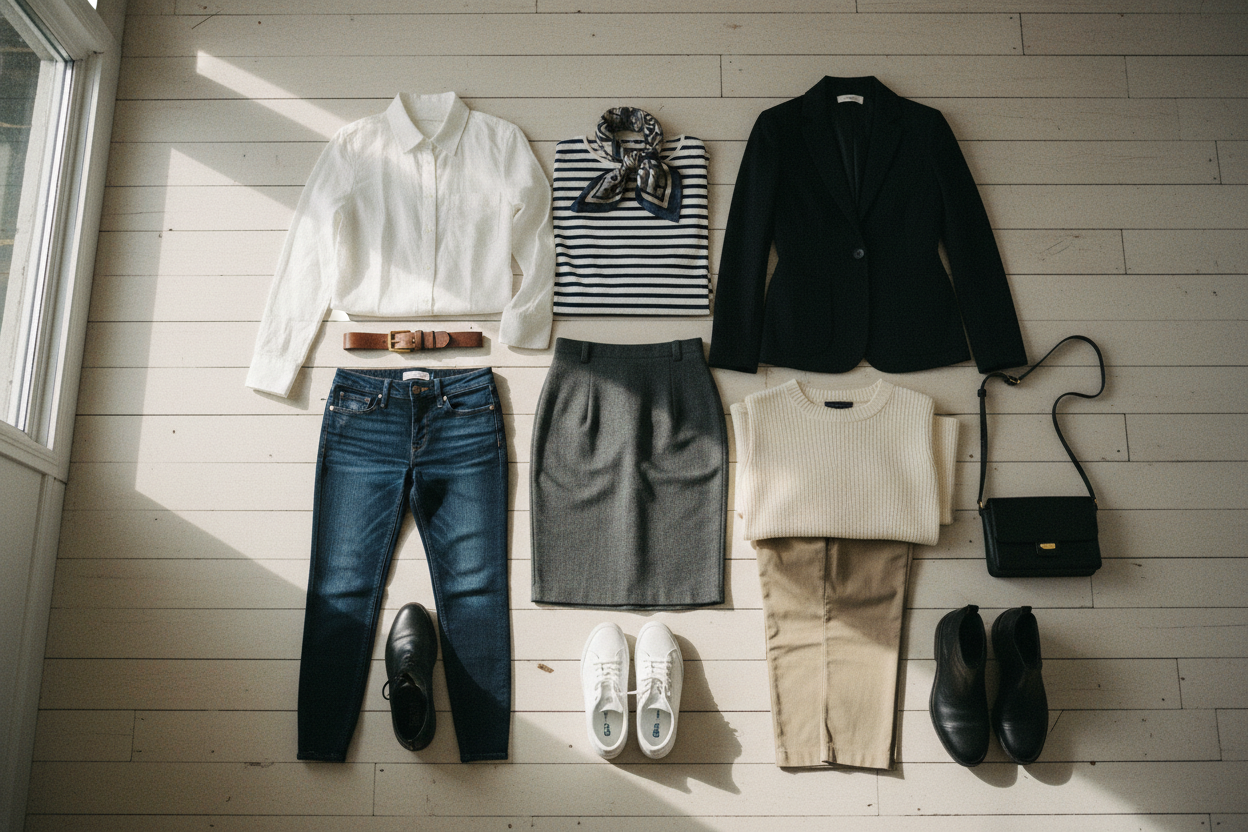
With intention, needs, colors, and fabrics clarified, assemble your core pieces. Aim for multipurpose tops (a polished tee, a crisp button-down, a lightweight knit), reliable bottoms (versatile denim, tailored trousers, a midi skirt), and third layers (a blazer, a cardigan, a trench or utility jacket). Add a go-anywhere dress that layers easily, and shoes that bridge roles: sleek sneakers, loafers, ankle boots, or simple heels. Choose a minimal bag and a belt to unify looks. Prioritize items that transition across contexts—desk to dinner, weekday to weekend—without costume changes. Match silhouettes that balance your proportions: if bottoms are roomy, keep tops neater; if a jacket is oversized, anchor it with slim lines underneath. Keep textures varied—denim, wool, silk, leather—so outfits feel dimensional. The result is a compact closet where each piece plays multiple positions, and every combination looks intentional, not improvised.
Master Simple Outfit Formulas
Outfit formulas make dressing fast and repeatable. Start with the three-piece rule: base top + base bottom + third layer. Then refine with one contrast (color, texture, or shine) and one finisher (belt, watch, or scarf). Try a column of color—matching top and bottom—topped with a contrasting jacket for elongation. Play with proportion: slim tee with wide-leg trousers; relaxed sweater with a pencil skirt; cropped jacket over a long dress. Use textural contrast (soft knit with structured cotton, matte wool with subtle sheen) to add depth without loud prints. Elevate casual looks by swapping sneakers for loafers or boots, and add a minimal necklace or neat cuff. Practice small styling moves—half-tucks, cuffed sleeves, rolled hems—that reshape silhouettes quickly. As you repeat winning combinations, you'll build a personal library of go-to uniforms that feel fresh through subtle changes.
Care, Rotate, and Streamline
A capsule thrives when it's well maintained. Establish simple care routines: air garments between wears, brush wool, de-pill knits, and steam to refresh. Follow care labels, but also learn your fabrics—gentle cycles, mesh bags, and low heat extend longevity. Rotate shoes and knits to allow recovery and reduce wear. Store with intention: fold heavy sweaters to avoid stretching, hang tailored pieces on sturdy hangers, and group items by category or color for quick assembly. Create a small repair kit for buttons, loose threads, and minor fixes, and schedule tailoring rather than delaying. Seasonally, conduct a micro-edit: remove duplicates, donate or resell what no longer fits your style or needs, and note gaps. Keep a running wishlist so upgrades replace, not multiply, similar items. When your closet only holds pieces you wear and care for, everything gets more mileage—and your daily routine gets notably calmer.
Evolve Without Overflow
A capsule wardrobe isn't static; it's a living reflection of your style evolution. Set gentle guardrails: a one-in, one-out policy, a defined palette, and a quarterly check-in to test new ideas. When curiosity strikes, experiment through accessories first—belts, scarves, or jewelry—to explore a mood without overturning your core. Shop intentionally with a try-on checklist: Does it complement at least three items? Is the fabric comfortable for a full day? Will it earn frequent rotation? Keep notes on wins and near-misses to sharpen your eye. Embrace signature details—a preferred neckline, a sleeve shape, a print scale—that make your looks uniquely yours. Let your capsule support milestones, routines, and shifting priorities without ballooning in size. By editing with care and adding with purpose, you'll create a wardrobe that stays cohesive, sustainable, and deeply personal—one you'll love reaching for, again and again.