Sustainable Swaps for an Eco-Friendly Home
Simple, budget-friendly swaps—from LED bulbs and refillable cleaners to composting—make your home healthier, lower-waste, and lighter on the planet.
Foundations of a Greener Home
Creating an eco-friendly home starts with mindset and small, consistent actions. Begin by identifying the biggest sources of waste and excess energy, then target simple sustainable swaps that deliver quick wins. Replace incandescent bulbs with long-lasting LED bulbs, plug devices into smart power strips to curb phantom load, and prioritize natural light during the day. Improve energy efficiency by sealing drafts, adding door sweeps, and using thermal curtains; these low-cost steps reduce heating and cooling needs without sacrificing comfort. Choose durable materials over disposables: glass jars for storage, stainless steel for drinkware, and ceramic for bakeware. Establish drop zones for recycling and reusables near the doors so habits stick, and keep a compact kit in your bag with a bottle, coffee cup, and utensils. Most importantly, set realistic goals and build routines through habit stacking—attach a new green action to something you already do. Progress compounds, and every small improvement raises your home's baseline of sustainability.
Kitchen & Pantry Upgrades
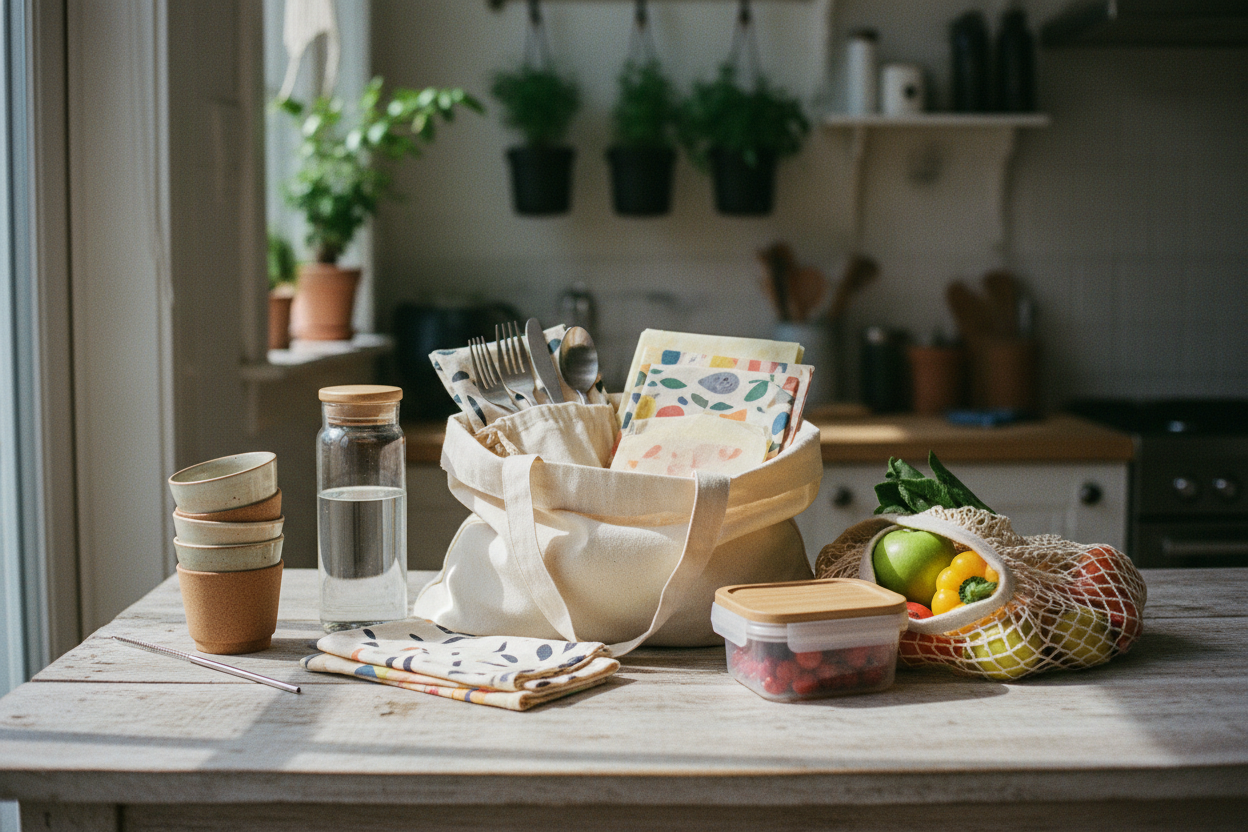
The kitchen is a powerhouse for meaningful waste reduction. Stock up on reusable containers and breathable produce bags, then store herbs in jars with water and greens in damp cloth to extend freshness. Embrace meal planning to align shopping with actual use, transforming leftovers into frittatas, soups, or grain bowls. If space allows, start composting with a countertop pail and an outdoor bin or municipal pickup; it diverts scraps from landfill and nourishes soil for balcony herbs. Swap plastic wrap for beeswax wraps, silicone lids, and oven-safe containers that go from freezer to table. Choose plant-forward meals more often to lighten your footprint, and brew coffee with a metal filter or French press to avoid single-use pods. Run the dishwasher only when full, select eco cycles, and air-dry to cut energy. When buying staples, prefer bulk refills and larger formats that reduce packaging, and keep a visible inventory list so you use what you have before purchasing more.
Bathroom and Laundry Swaps
Bathrooms and laundry rooms are perfect for thoughtful water and plastic reductions. Install a low‑flow showerhead and faucet aerators to maintain comfort while decreasing use, then time showers with a simple playlist to stay mindful. Choose bar soap, solid shampoo, or refill concentrates in durable bottles to cut single-use packaging. Trade plastic toothbrushes for bamboo handles and look for recycled or tree-free toilet paper. In the laundry, wash with cold water, run full loads, and select a gentle, concentrated detergent; these habits save energy and extend fabric life. Air-dry garments when possible and add wool dryer balls to shorten machine cycles. To limit microfibers, use a microplastic filter or specialized wash bag for synthetics, and favor natural fibers like cotton, linen, or hemp for new purchases. Keep a clearly labeled hamper system—lights, darks, delicates—so loads are efficient and fewer accidental re-washes happen. Small organizers and hooks also maintain order, making it easier to repeat every sustainable choice without friction.
Cleaning and Indoor Air
Healthy, low-waste cleaning centers on simple, non-toxic ingredients and mindful ventilation. Mix basic solutions with vinegar, baking soda, warm water, and a touch of castile soap for counters, glass, and floors; add citrus peels to infusions for a gentle scent without synthetic aerosols. Designate a set of reusable cloths in natural fibers, color-coded for kitchen, bath, and dusting to avoid cross-contamination. Vacuum with a fine filter and regularly dust high surfaces to reduce allergens and keep indoor air quality at its best. Open windows when weather allows, run exhaust fans while cooking and bathing, and avoid burning fragranced products that can contribute to indoor pollution; opt for unscented or naturally derived alternatives in moderation. For stubborn grime, rely on elbow grease and steam rather than harsh chemicals. Store concentrates neatly in labeled glass bottles, and keep a compact caddy so your routine is efficient. The easier a system is to follow, the more consistently your home stays clean and sustainable.
Waste‑Lite Living and Mindful Decor
Elevating a green lifestyle goes beyond products; it's about intentional consumption and joyful simplicity. Practice the refuse, reduce, reuse, repair, recycle hierarchy, with an emphasis on refusing what you don't need and repairing what you already love. Furnish with secondhand pieces, reclaimed wood, or upcycled finds; these add character while conserving resources. Choose natural fibers for rugs and textiles, and favor modular, repairable furniture over fast decor. Host swap parties, borrow from tool libraries, and share seldom-used items with neighbors to keep goods circulating. Keep a small mending kit for buttons and hems, and learn basic fixes for wobbly chairs or loose handles. Declutter seasonally, but pass items on responsibly through gifting or reselling so they continue a useful life. Track a few personal metrics—like trash volume or energy use—to celebrate progress and course-correct. When your home reflects thoughtful choices, sustainability becomes not a chore but a welcoming, nourishing way to live.